
Agricultural Processing, Value Addition & Farmer Support Program
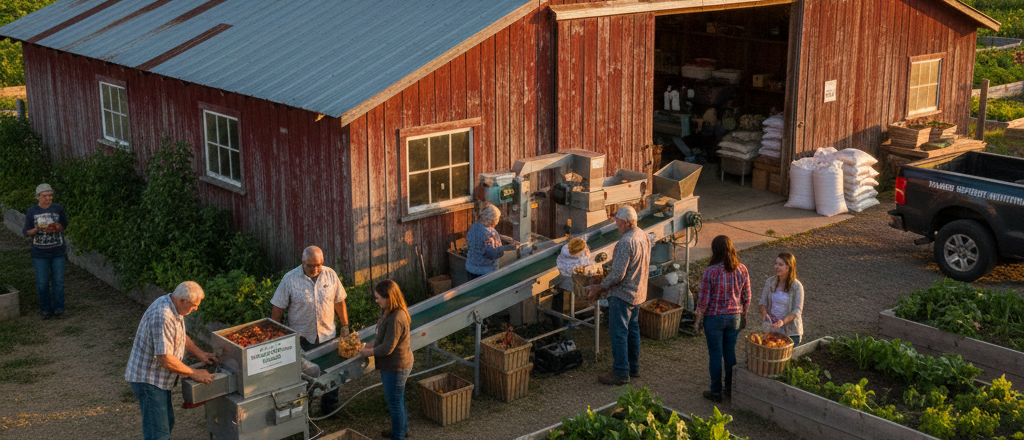
Agriculture remains the primary source of livelihood for millions of rural households across developing regions, yet many farmers continue to operate at subsistence levels despite their hard work. One of the most persistent challenges facing smallholder farmers is post-harvest loss, where large volumes of produce such as fruits, vegetables, grains, and livestock products spoil or are wasted due to lack of storage, processing facilities, or access to markets. In many farming communities, crops like tomatoes, mangoes, palm fruits, and vegetables must be sold immediately after harvest at very low prices, often under distress conditions, because farmers lack the means to preserve or process them. This significantly limits income, deepens poverty, and discourages long-term investment in agriculture.
Another major constraint is the limited value addition along the agricultural value chain. Many farmers sell raw produce rather than processed or semi-processed products, missing opportunities to earn higher returns. The absence of local processing centers, cold storage facilities, and basic agro-industrial infrastructure means communities depend on distant processors or middlemen who capture most of the value. Additionally, inadequate access to modern farming knowledge, quality inputs, extension services, and livestock support further constrains productivity and resilience, especially in the face of climate variability, market volatility, and rising production costs.
The Agricultural Processing, Value Addition & Farmer Support Program was developed to address these structural challenges by strengthening farmers’ capacity to move beyond subsistence agriculture toward more profitable, sustainable, and resilient livelihoods. Under this program, PASDO supports the construction and equipping of agricultural processing centers that enable farmers to transform raw produce into higher-value products. These include facilities such as mango juice processing units, tomato paste production centers, palm fruit mills, grain processing units, and other community-based agro-processing hubs. By enabling local processing, farmers are able to extend shelf life, reduce waste, stabilize prices, and access broader markets.
In addition to processing infrastructure, the program supports the development of storage facilities, including dry storage and other appropriate preservation systems, to help farmers manage harvest surpluses and reduce seasonal losses. These interventions allow farmers to store produce safely, time their sales better, and avoid distress selling during peak harvest periods. Where appropriate, PASDO also supports small-scale equipment and tools that improve efficiency along the production and post-harvest chain.
Recognizing that infrastructure alone is not sufficient, PASDO integrates farmer support services and capacity building into the program. This includes agricultural extension and education activities that provide farmers with practical knowledge on improved farming practices, post-harvest handling, processing techniques, quality control, and basic agribusiness management. The program also supports access to critical inputs such as seedlings, planting materials, fertilizers, and livestock resources, based on local needs and ecological suitability.
The program extends to livestock support, acknowledging the important role of animal husbandry in food security and rural income generation. Interventions include livestock management training, provision of starter livestock, and support for small-scale processing of animal products where relevant. Through these combined actions, the program aims to improve productivity, diversify income sources, and strengthen household resilience.
Programs under the Agricultural Processing, Value Addition & Farmer Support Program are implemented in communities where they are most needed, guided by local priorities, needs assessments, and partnerships.
Due to limited staffing as a result of the COVID-19 pandemic, we are not able to concurrently run some programs and have therefore temporarily suspended them (and removed them here). They include the Information, Leadership and Skill literacy (ILS) Project , the Sustainable Aquaculture Supply in West and Central Africa (SASWeCA) Project, the Learn Chinese Project (LCP) and others. We’d appreciate responding to service inquires on them only after they are restored.