
Basic Education Program (BEP)
Access to quality basic education remains a major challenge in many parts of the world, particularly for children from low-income households and underserved communities. Barriers such as inadequate school infrastructure, overcrowded classrooms, limited teaching resources, and the high cost of supplementary learning often prevent children from achieving foundational literacy, numeracy, and problem-solving skills. These challenges can lead to poor learning outcomes, early school dropouts, and long-term limitations on personal and economic opportunities.
Even where schools exist, many students struggle to keep up academically due to gaps in teaching capacity or the absence of individualized learning support. Families with limited income are frequently unable to afford extra lessons or enrichment programs that could help their children strengthen key subjects such as English, Mathematics, and Science. At the same time, teachers, who play a critical role in shaping learners at formative stages, often work under demanding conditions, managing heavy workloads with limited institutional support. These combined pressures weaken the overall quality and effectiveness of basic education.
The PASDO Basic Education Program (BEP) is designed to strengthen access to and the quality of primary and secondary education through targeted, context-specific interventions. The program supports students by subsidizing access to after-school learning opportunities, particularly online classes in core subjects. PASDO partners with education service providers to make these learning supports more affordable for qualifying students, allowing families to pay reduced rates while PASDO covers part of the cost. This approach helps students receive additional academic support without placing further financial strain on households.
Recognizing that effective education systems depend heavily on the wellbeing and capacity of teachers, the BEP also includes interventions focused on teacher support. In some locations, teachers benefit from welfare-oriented initiatives that enable them to hire virtual assistants at subsidized rates to handle non-sensitive administrative or support tasks. By easing workload pressures, these interventions allow teachers to focus more on instruction, lesson preparation, and student engagement, ultimately improving classroom outcomes.
In addition, PASDO supports teacher development and training initiatives where gaps in skills or resources are identified. These may include professional development programs, capacity-building workshops, or partnerships aimed at strengthening teaching methods and classroom management.
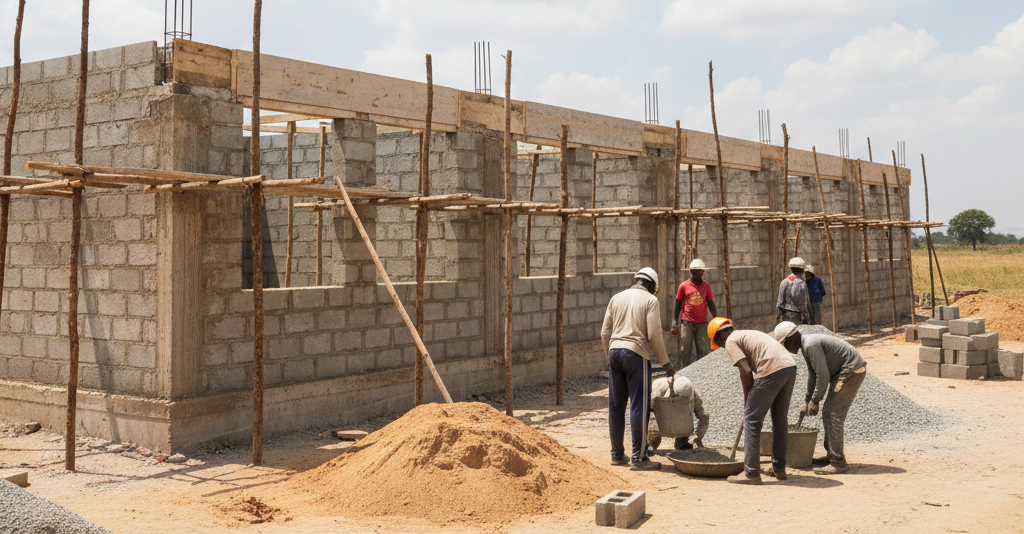
A core component of the BEP is the improvement of educational infrastructure and learning environments. In communities where school facilities are inadequate, overcrowded, or deteriorating, PASDO supports the construction of new classrooms, the renovation and repair of dilapidated structures, and the equipping of learning spaces to meet basic educational standards. This includes the provision of desks, chairs, and essential classroom furniture, as well as learning tools such as computers, laboratory equipment for science experiments, and other instructional materials. By strengthening physical infrastructure and access to learning equipment, the BEP helps create safer, more functional, and more engaging environments that support effective teaching and learning.
BEP activities are implemented based on local needs assessments, priorities, and available partnerships, meaning that the scope and mix of interventions may vary across communities.
Due to limited staffing as a result of the COVID-19 pandemic, we are not able to concurrently run some programs and have therefore temporarily suspended them (and removed them here). They include the Information, Leadership and Skill literacy (ILS) Project , the Sustainable Aquaculture Supply in West and Central Africa (SASWeCA) Project, the Learn Chinese Project (LCP) and others. We’d appreciate responding to service inquires on them only after they are restored.